

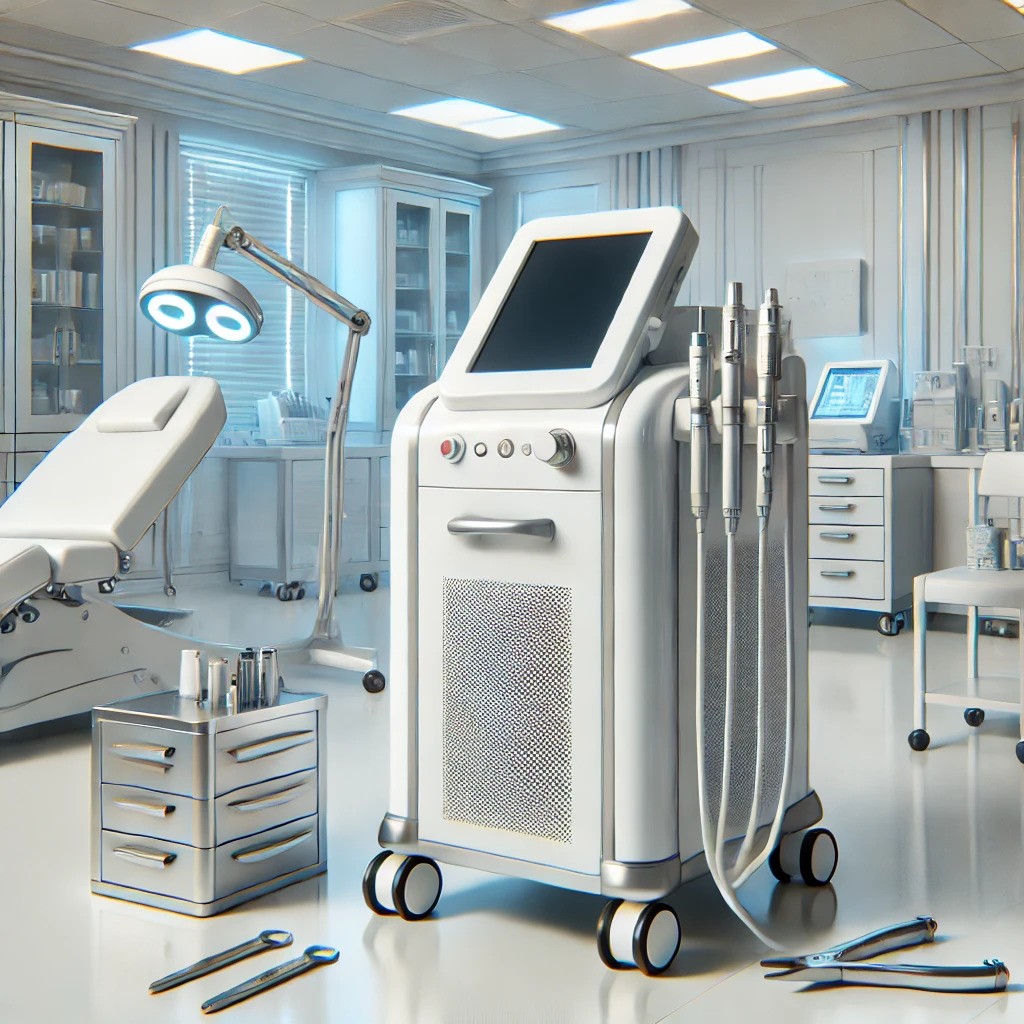
A laser can look clean and still be overdue for attention. Cooling performance can drift, a handpiece can pick up damage, filters can clog, and small faults can turn into expensive downtime if nobody records them. A useful maintenance routine is mostly ordinary work done consistently: clean what the manufacturer says to clean, record usage, deal with warning signs early and keep professional servicing on schedule.
Table Of Content
- Start with the manufacturer’s service schedule
- Build a short daily routine
- Keep a usage and fault log
- Pay attention to cooling and optical components
- Do not service by calendar alone
- Replace consumables for the right reason
- Treat warning signs as information
- Keep the paperwork with the machine
- When maintenance becomes a replacement decision
The exact routine depends on the make, model and treatment system, so the manufacturer’s manual and service instructions should always take priority over a generic checklist.
Start with the manufacturer’s service schedule
Find the manual, service book and any maintenance notices for the exact model. Note the recommended inspection intervals, cooling-fluid requirements, filter changes, handpiece care and any parts with a defined service life.
That sounds basic, but it matters when a clinic has several machines from different manufacturers. An IPL machine may have different consumables and checks from a laser hair removal machine, while an all-in-one system can have several handpieces and cooling circuits to monitor.
Build a short daily routine
Cleaning should be boring. That is usually a good sign. Staff should know which surfaces can be wiped, which optical parts need a specific method, and which components should never be opened by an operator.
- Exterior and controls: remove treatment residue and dust using products approved for the machine.
- Handpieces and treatment windows: inspect for chips, clouding, contamination, loose fittings or damaged cables. Follow the manufacturer’s cleaning instructions rather than improvising with abrasive products.
- Cooling: watch water levels, flow warnings, temperature alerts and unusual fan or pump noise where these apply to the model.
- Cables, plugs and pedals: look for crushed insulation, loose connectors and obvious damage before use.
Do not turn cleaning into repair work. HSE guidance on laser safety at work notes that maintenance involving access to laser systems should be carried out by trained and authorised people. That is a useful boundary for clinics to keep clear.
Keep a usage and fault log
A service engineer can do more with a machine history than with the sentence, “It has been a bit odd lately.” Record shot counts or operating hours where the system provides them, service dates, replacement parts, error codes and any change noticed by operators.
Patterns become easier to spot. A recurring temperature warning after long sessions, for example, gives a technician much more to work with than an isolated fault reported weeks later.
The same records become useful when you eventually sell the machine. A buyer comparing two similar units will usually want evidence of how the equipment has been used and maintained, not just a claim that it has been looked after.
Pay attention to cooling and optical components
Heat management is central to many laser and IPL platforms. Dirty filters, incorrect fluid, restricted airflow or a failing pump can affect reliability. Follow the model-specific instructions for fluid type, replacement intervals and filter access. If the manual says a component is service-only, leave it to the service engineer.
Optical components deserve the same care. A marked treatment window or damaged lens can change how a handpiece performs. Check before the working day gets busy, not halfway through a treatment list.
Do not service by calendar alone
A fixed annual date is easy to remember, but usage matters too. A machine running six days a week is not in the same situation as an identical unit used a few times each month. Manufacturer guidance may specify service intervals by time, pulse count, operating hours or a combination of these.
Professional servicing can include output checks, calibration, cooling-system inspection, electrical checks, software or firmware checks, and replacement of parts that operators should not access. Ask the engineer what was tested and keep the service report.
For electrical equipment used at work, HSE says the type and frequency of checks, inspections and testing should reflect the equipment, its environment and previous results. Their guidance on maintaining electrical equipment safely is worth keeping with your wider clinic procedures.
Replace consumables for the right reason
Filters, lamps, treatment tips, protective windows, cooling fluids and other consumables vary widely between systems. Replace them according to the manufacturer’s instructions or a competent technician’s advice. Changing parts too late can create faults. Changing expensive parts on an arbitrary timetable can waste money.
Keep the part number and date when something is replaced. If a machine uses a shot-limited handpiece, record both the old and new counts where possible.
Treat warning signs as information
Intermittent faults are easy to ignore because the machine may restart and appear normal. A new noise, smell, heat warning, output change, damaged cable or repeated error code deserves attention. Stop using equipment when there is a safety concern and follow the manufacturer’s fault procedure.
High-power lasers can cause serious eye and skin injury, so safety checks are not cosmetic housekeeping. Your workplace risk assessment, local rules, operator training and protective equipment should match the equipment being used. HSE’s non-ionising radiation guidance provides a useful starting point for UK employers.
Keep the paperwork with the machine
Store the manual, service reports, invoices for major replacement parts, calibration records where supplied, training records that belong with the equipment, and a simple fault history. If the machine changes rooms or operators, the records should not disappear into somebody’s inbox.
Good documentation also makes a future sale easier. Buyers can compare the physical condition with the service history and ask better questions. If you are preparing a machine for sale, our guide on how to sell your laser machine covers the listing and handover side.
When maintenance becomes a replacement decision
There is a point where repeated repairs, poor parts availability or weak manufacturer support make a replacement worth considering. Compare the next repair bill with the machine’s value, expected workload and the cost of downtime. Do not judge only by age. A documented older machine with available parts may be a better working asset than a newer unit with uncertain support.
You can compare current listings across tattoo removal lasers, IPL machines, skin treatment machines and other categories before deciding whether to repair, replace or sell. If the existing machine is still serviceable but no longer suits your clinic, the Sell Your Laser page explains how to list it.