

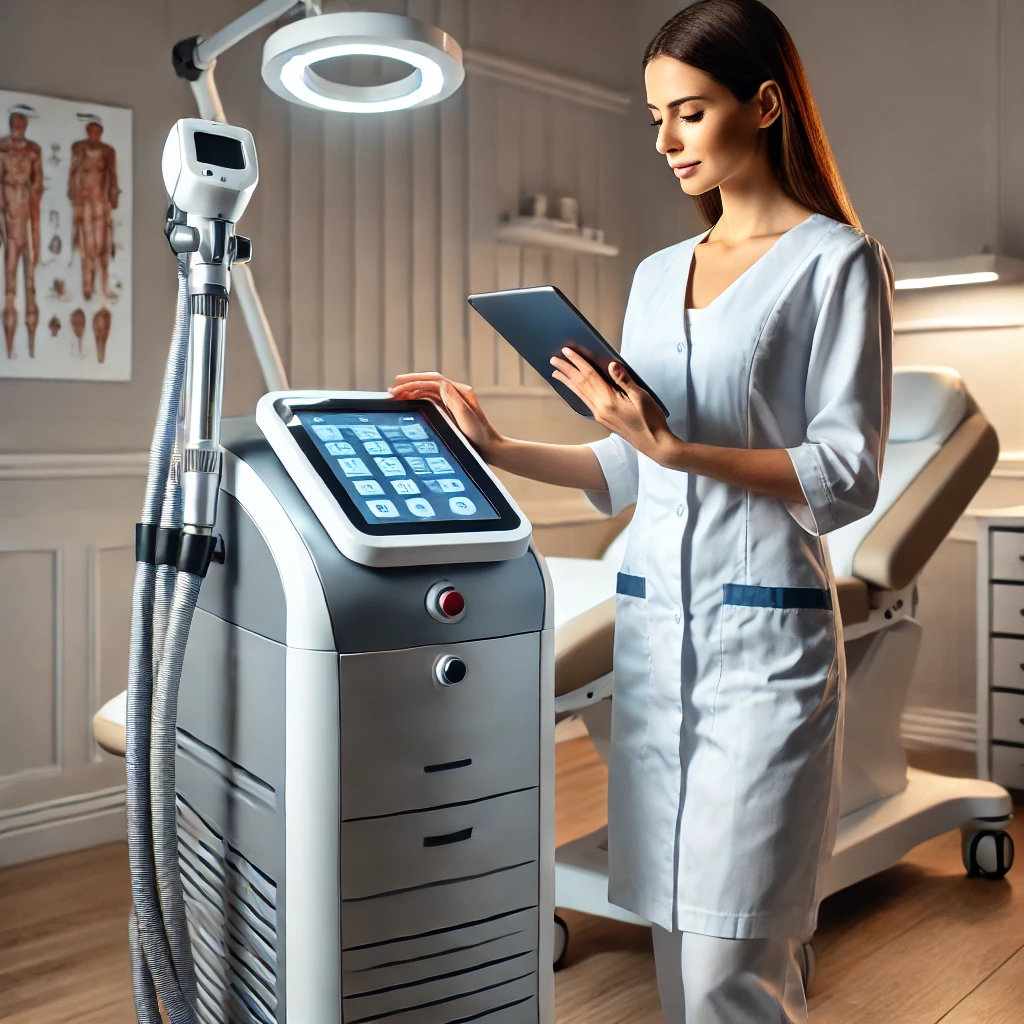
The expensive mistake with a used cosmetic laser is rarely a scratch on the casing. It is the missing service history, an unsupported handpiece, a machine that cannot be demonstrated properly, or a payment made before the buyer has checked who is selling it.
Table Of Content
- Decide what the machine actually needs to do
- Verify the seller and the machine
- Ask for the service history, not just the last service date
- See it working before you commit
- Check parts, handpieces and manufacturer support
- Understand the regulatory position
- Put the condition and included items in writing
- Use a payment method that fits the transaction
- Price the risk, not just the machine
- Walk away from gaps that matter
Pre-owned equipment can make good commercial sense, but the checks need to happen before money changes hands. Use the listing as the start of your due diligence, not the end of it.
Decide what the machine actually needs to do
Start with treatments, expected workload and the clients you intend to treat. A clinic buying primarily for hair removal has different requirements from one adding tattoo removal or IPL work.
Compare the relevant categories before settling on a model. Buy And Sell Lasers has separate listings for laser hair removal machines, tattoo removal lasers, IPL machines and all-in-one systems. That makes it easier to compare like with like rather than buying on price alone.
Write down the non-negotiables: wavelength or technology, handpieces, spot sizes, cooling arrangement, electrical requirements, software version, training needs and available space. If a seller cannot confirm a specification that matters to your clinic, treat it as unknown rather than assuming.
Verify the seller and the machine
Ask who owns the equipment, where it is currently installed and why it is being sold. For a business seller, check the trading details and the address independently. Companies House provides a public company information service for UK companies.
For the machine itself, ask for the serial number and a photograph of the identification plate. Compare those details with invoices, service reports and any warranty or manufacturer records the seller provides. A neat folder of documents is useful only when the serial numbers and dates line up.
Ask for the service history, not just the last service date
A single sticker saying “serviced” tells you very little. Ask for reports showing what was inspected, calibrated or replaced, who carried out the work and when. If a major component or handpiece has been changed, request the paperwork for that too.
Look for gaps. A machine used heavily for several years with no service records needs a different level of scrutiny from a lightly used system with a continuous history.
Our article on maintaining and servicing laser machines explains the kinds of records that are useful to keep throughout ownership.
See it working before you commit
An in-person inspection is preferable where practical. If distance makes that difficult, ask for a live video call rather than relying only on a polished prerecorded clip.
Ask the seller to show the machine starting from cold, the control screen, serial plate, error history if available, each included handpiece, shot counts or operating hours, cooling status and any visible damage. If the machine has several functions, see each one demonstrated where it is safe and appropriate to do so.
Do not ask an unqualified person to perform unsafe tests simply to prove a sale. High-power lasers can cause serious eye and skin injury. HSE’s laser safety guidance explains why access, maintenance and operation need suitable controls and trained people.
Check parts, handpieces and manufacturer support
A low purchase price can disappear quickly if a handpiece is near the end of its life or a replacement part is no longer available. Before buying, contact the manufacturer or a competent service provider and ask whether the exact model is still supported.
- Are replacement handpieces available?
- Can the system still be serviced and calibrated in the UK?
- Are software licences or passwords transferable?
- Does the machine require proprietary consumables?
- Are manuals and training materials available for the exact version?
Get prices for the expensive items. Knowing that a replacement exists is only half the question.
Understand the regulatory position
Cosmetic equipment does not all sit in the same regulatory category. The intended purpose, product classification, location and way the equipment is supplied can affect the rules that apply.
If the equipment is a medical device, the MHRA’s current guidance on regulating medical devices in the UK explains the framework for Great Britain and Northern Ireland. Do not rely on a seller saying “CE marked” or “UKCA marked” without checking the label, documentation and what that marking means for the particular device.
Also consider workplace electrical and laser safety, local licensing where relevant, insurance conditions and operator training before putting a purchased machine into use.
Put the condition and included items in writing
The sales document should identify the machine clearly and say what is included. Record the serial number, price, VAT position where applicable, handpieces, accessories, manuals, keys, pedals, cooling units and any known faults.
Delivery terms matter with heavy equipment. Agree who disconnects it, who packs it, who arranges transport, who insures it in transit and what happens if it arrives damaged. If collection is required, put that in writing as well.
Use a payment method that fits the transaction
There is no single payment method that makes a purchase risk-free. Check the terms of any buyer protection before assuming it covers business equipment of this value. Be cautious if payment instructions change at the last minute or the seller creates pressure to transfer funds immediately.
Verify bank details through a separate contact method before sending a large payment. Keep invoices, messages and the agreed specification together. For higher-value purchases, professional legal or financial advice may be sensible.
Price the risk, not just the machine
Compare similar models, but adjust for age, service history, shot count or hours, included handpieces, recent major parts, transport costs and immediate servicing. A cheaper unit that needs a handpiece, engineer visit and specialist transport can cost more than the better-documented alternative.
The companion guide Buying a Used Laser Machine: What to Look For goes deeper into technical condition and ownership costs.
Walk away from gaps that matter
A seller may genuinely have lost an old invoice or manual. That does not automatically make the machine unsuitable. The important question is whether the missing information prevents you from checking ownership, safety, serviceability or the specification you need.
If you cannot establish who owns the machine, cannot see it working, cannot verify its identity, or cannot get a sensible answer about a serious fault, the safest buying decision may be not to buy that unit.
When you are ready to compare equipment, browse the current marketplace listings. Sellers preparing their own machine can use the Sell Your Laser page.